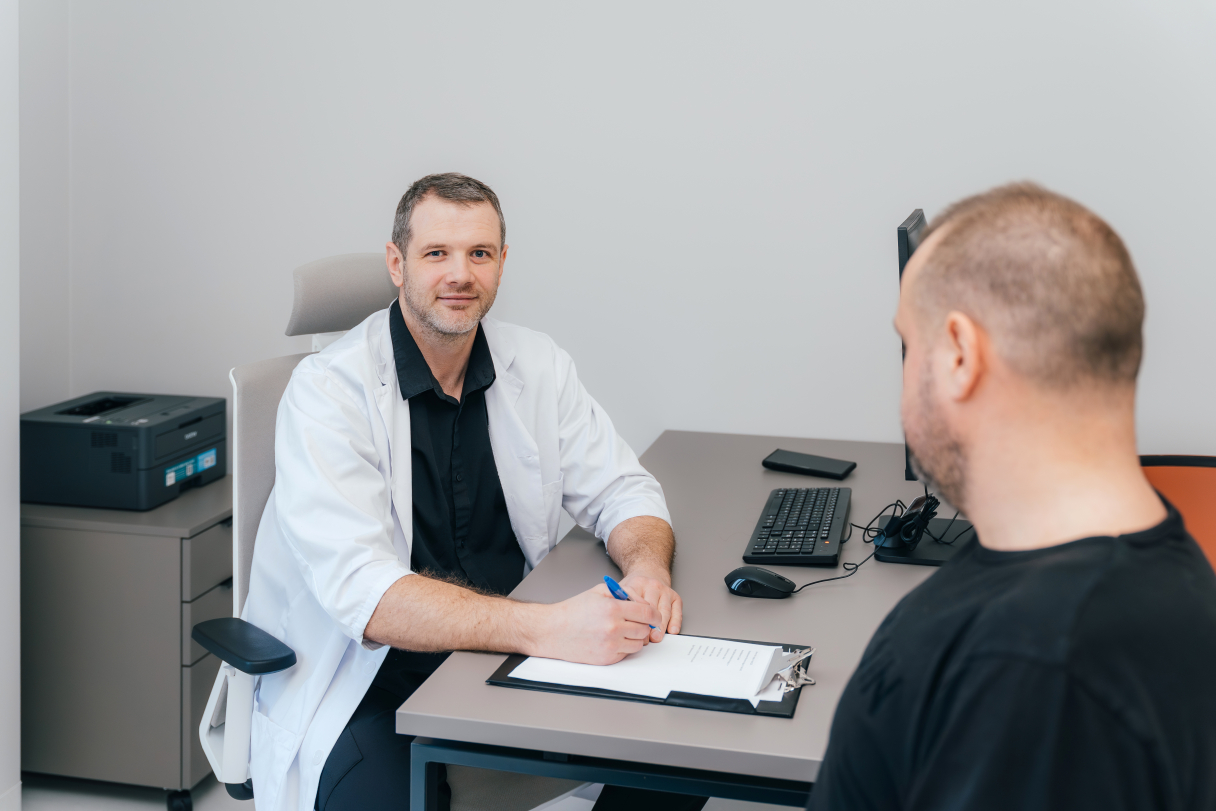
Prostate biopsy
What is a prostate biopsy?
A prostate biopsy is a procedure in which small tissue samples are taken from the prostate for further laboratory analysis.
A biopsy helps determine the exact cause of elevated PSA levels, nodular changes, or other suspicious findings.
The procedure is performed under ultrasound guidance and is usually well tolerated.
How is the procedure performed?
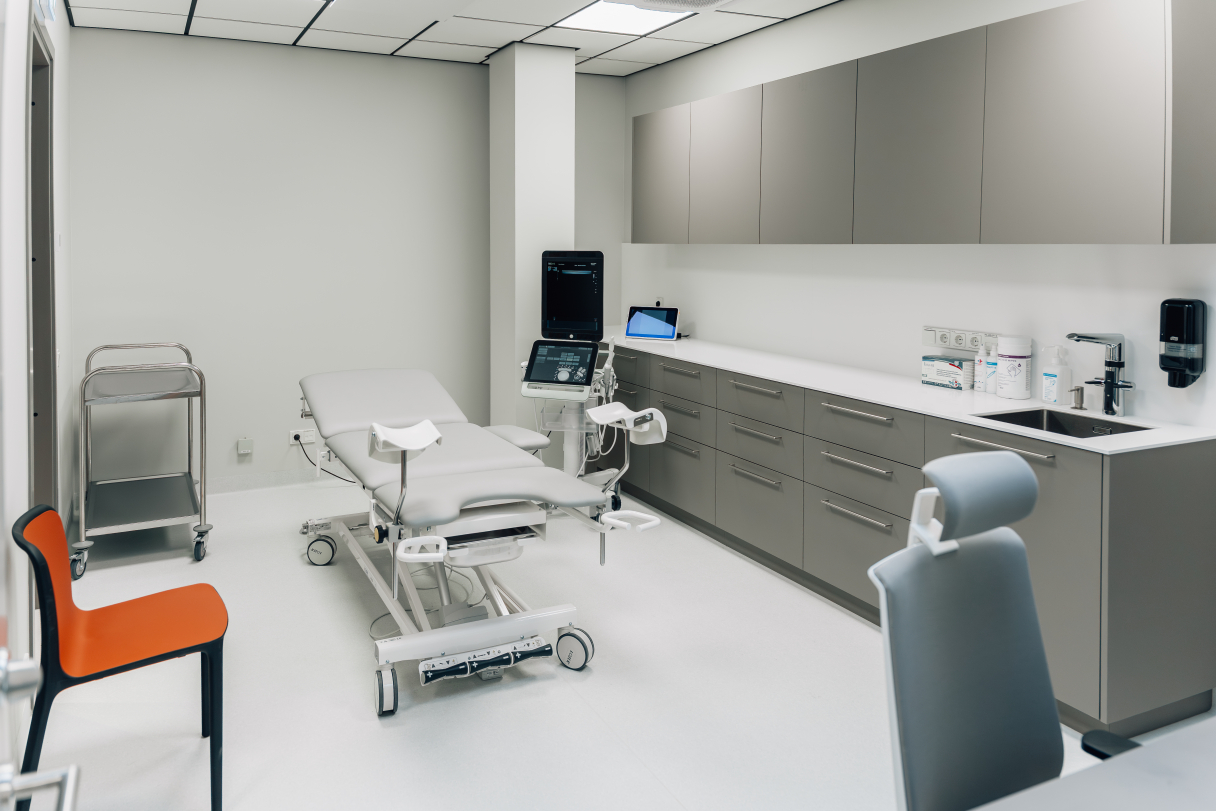
- The examination is usually performed using transrectal ultrasound (TRUS).
- Local anesthesia is given before the procedure to reduce discomfort.
- Several small tissue samples are taken from the prostate using a thin needle.
The procedure usually takes 20–30 minutes.
You may feel temporary pressure or a mild pricking sensation, but severe pain is not typical.
What is important to know before the biopsy?
Before the procedure, we prescribe an antibiotic to prevent infection.
Inform your doctor if:
- you are taking blood thinners
- you have a bleeding disorder
- you have allergies
- you have chronic diseases
The doctor will give you precise individual instructions before the procedure.
What sensations may occur after the biopsy?
After the procedure, you may experience:
- Mild pain or discomfort in the pelvic area
- Blood in the urine or stool for a few days
- Blood in the semen (may persist for several weeks)
- Mild feverish feeling on the first day
These symptoms are usually temporary.
What to do after the procedure?
- Drink more fluids.
- Avoid heavy physical activity for 1–2 days.
- Take the prescribed antibiotics according to instructions.
- Monitor how you feel.
When should you contact a doctor immediately?
Contact us immediately if you experience:
High fever (over 37 °C)
Severe or increasing pain
Difficulty urinating
Heavy bleeding
Chills or feeling unwell
When will the results be ready?
Biopsy results are usually ready within a few weeks.
The doctor will discuss the results with you and, if necessary, plan further treatment or follow-up.
A prostate biopsy is an important diagnostic procedure that helps make an accurate diagnosis and choose the appropriate treatment plan.
Our goal is to ensure that you feel safe during the procedure and well informed throughout the entire process.